
Case Counts will be updated weekdays around 12pm. Counts are based on positive laboratory test results received by the Health Department. Counts are considered preliminary and are subject to change as additional data is processed, verified, or jurisdictionally reassigned as necessary. Last Update: 9/23/26
Prevention Tips, Food Preparation Guidance, and Sensitive Job Exclusions Below. Click on the Green Title to minimize a section.
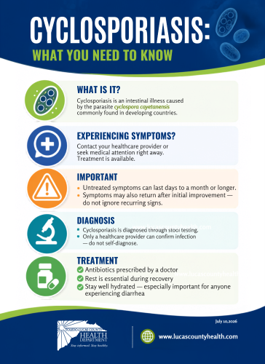
Cyclosporiasis is a diarrheal illness caused by the parasite called cyclospora cayetanensis.
Most people infected with Cyclospora develop watery diarrhea, stomach cramping, bloating or increased gas, fatigue, and nausea. Symptoms typically start between 2-14 days after ingesting the parasite.
Sometimes people infected with Cyclospora will have no symptoms at all.
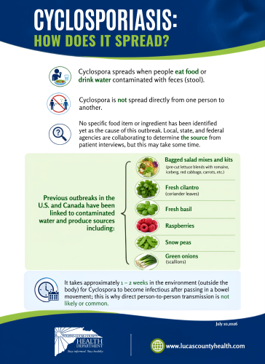
Cyclospora spreads when people eat food or drink water contaminated with feces (stool).
Cyclospora is not spread directly from one person to another.
No specific food item or ingredient has been identified yet as the cause of this outbreak. Local, state, and federal agencies are collaborating to determine the source from patient interviews, but this may take some time.
In recent years, outbreaks have occurred in the U.S. as a result of eating contaminated fresh produce, especially during the summer months. Previous outbreaks in the U.S. and Canada have been linked to contaminated water and produce sources including:
- Bagged salad mixes and kits (pre-cut lettuce blends with romaine, iceberg, red cabbage, carrots, etc.)
- Fresh cilantro (coriander leaves)
- Fresh basil
- Raspberries
- Snow peas
- Green onions (scallions)
It takes approximately 1 – 2 weeks in the environment (outside the body) for Cyclospora to become infectious after passing in a bowel movement; this is why direct person-to-person transmission is not likely or common.
How can I prevent Cyclospora infections?
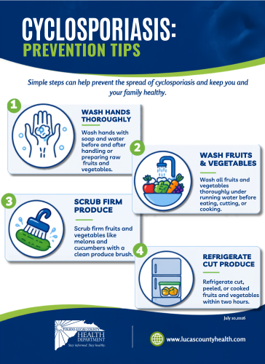
Wash your hands with soap and water before and after handling, preparing, or eating fresh produce, and after using the bathroom or changing a diaper.
Wash produce items thoroughly under clean running water and scrub firm produce (like melons or cucumbers) with a produce brush before eating, cutting, or cooking.
Remove damaged or bruised areas on fresh produce and peel fruits and vegetables (if possible) before preparing, cooking, or eating them.
Refrigerate cut, peeled, or cooked fruits and vegetables as soon as possible or within two hours, and store produce items away from raw meats or seafood.
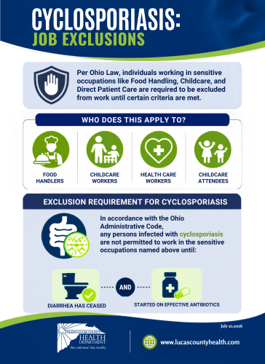
Per Ohio Law individuals working in sensitive occupations like Food Handling, Childcare, and Direct Patient Care are required to be excluded from work until certain criteria are met. These exclusions protect workers, customers, and patients from the spread of illness.
This is why getting tested is important if you have symptoms, as the exclusion criteria for Cyclosporiasis will be different than for norovirus, salmonellosis, etc.
Exclusions for Food Handlers, Health Care Workers, Childcare Workers, and Childcare Attendees:
In accordance with the Ohio Administrative Code, any persons infected with cyclosporiasis are not permitted to work in the sensitive occupations named above until diarrhea has ceased and you been started on effective antibiotics.
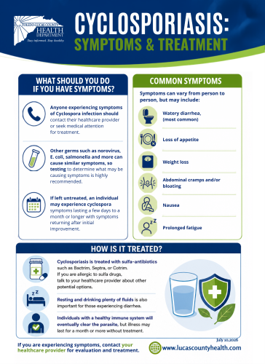
Anyone experiencing symptoms of Cyclospora infection should contact their healthcare provider or seek medical attention for treatment.
Other germs such as norovirus, E. coli, salmonella and more can cause similar symptoms, so testing to determine what may be causing symptoms is highly recommended.
If left untreated, an individual may experience cyclospora symptoms lasting a few days to a month or longer with symptoms returning after initial improvement.
Common Symptoms:
- Watery diarrhea, (most common)
- Loss of appetite
- Weight loss
- Abdominal cramps and/or bloating
- Nausea
- Prolonged fatigue
Cyclosporiasis is treated with sulfa-antibiotics such as Bactrim, Septra, or Cotrim. If you are allergic to sulfa drugs, talk to your healthcare provider about other potential options.
Resting and drinking plenty of fluids is also important for those experiencing diarrhea.
Individuals with a healthy immune system will eventually clear the parasite, but illness may last for a month or more without treatment.
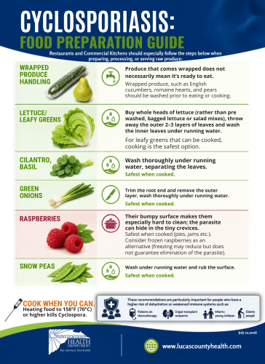
Restaurants and Commercial Kitchens should especially follow the steps below when preparing, processing, or serving raw produce:
Wrapped Produce Handling: Produce that comes wrapped does not necessarily mean it’s ready to eat. Wrapped produce, such as English cucumbers, romaine hearts, and pears should be washed prior to eating or cooking.
Lettuce/leafy greens: Buy whole heads of lettuce (rather than prewashed, bagged lettuce or salad mixes), throw away the outer 2–3 layers of leaves and wash the inner leaves under running water. For leafy greens that can be cooked, cooking is the safest option.
Cilantro, basil: Wash thoroughly under running water, separating the leaves. Safest when cooked.
Green onions: Trim the root end and remove the outer layer, wash thoroughly under running water. Safest when cooked.
Raspberries: Their bumpy surface makes them especially hard to clean; the parasite can hide in the tiny crevices. Safest when cooked (pies, jams etc.). Consider frozen raspberries as an alternative (freezing may reduce but does not guarantee elimination of the parasite).
Snow peas: Wash under running water and rub the surface. Safest when cooked.
Cook when you can. Heating food to 158°F (70°C) or higher kills Cyclospora.
These recommendations are particularly important for people who have a higher risk of dehydration or weakened immune systems such as patients on chemotherapy, organ transplant recipients, infants/young children, and elderly people.