The Toledo-Lucas County Health Department (TLCHD) is investigating a recently confirmed case of measles involving an individual from another state who traveled through Lucas County.
The individual was traveling on Amtrak Train 41 from Chicago when they began experiencing worsening symptoms. Upon arriving at the Toledo station on Sunday, September 13th at approximately 11:40 p.m., the individual sought medical attention.
Individuals who are not immunized against measles, do not know whether they are immune, and were at the location identified above, or who have been in contact with someone experiencing a fever or unexplained rash, should contact their healthcare provider for further guidance.
“While measles is very contagious, it is important to remember that there are effective tools to prevent its spread,” said Karim Baroudi, Toledo-Lucas County Health Commissioner. “Our disease surveillance teams are actively investigating and monitoring for additional transmission, as well as working with healthcare providers and community partners to protect our residents. We encourage everyone to check their vaccination status and talk with their healthcare provider if they have questions about measles or the MMR vaccine.”
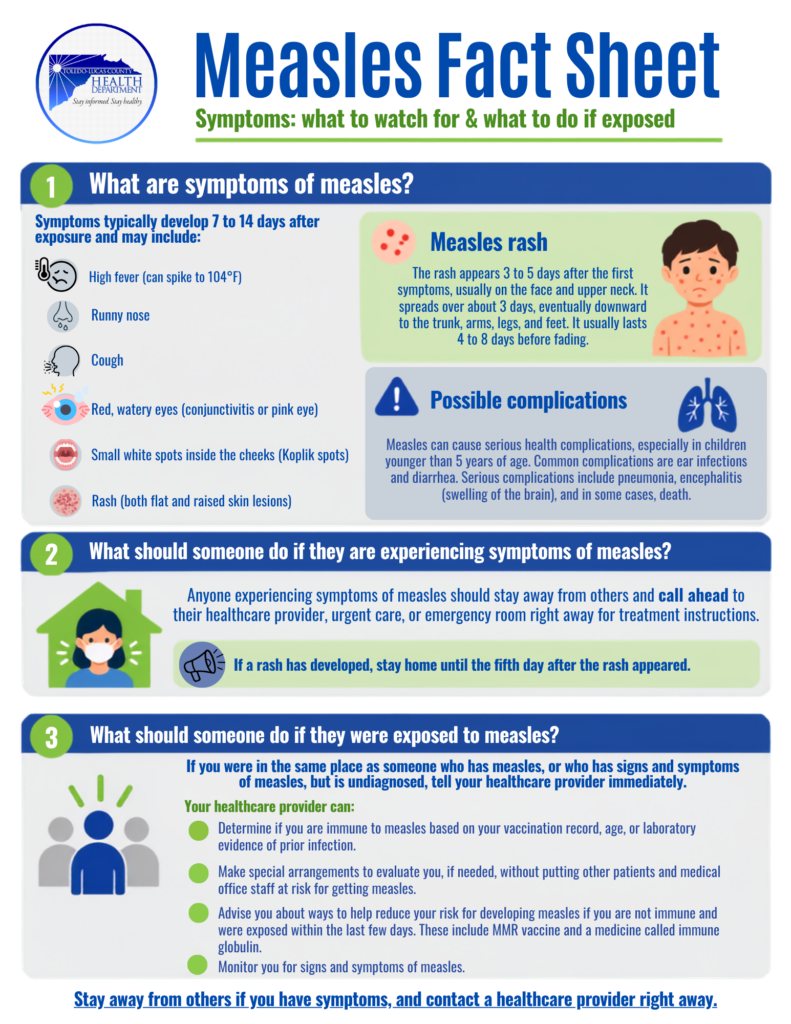
Symptoms of measles typically develop 7 to 14 days after exposure. However, symptom onset may be delayed in individuals with compromised immune systems.
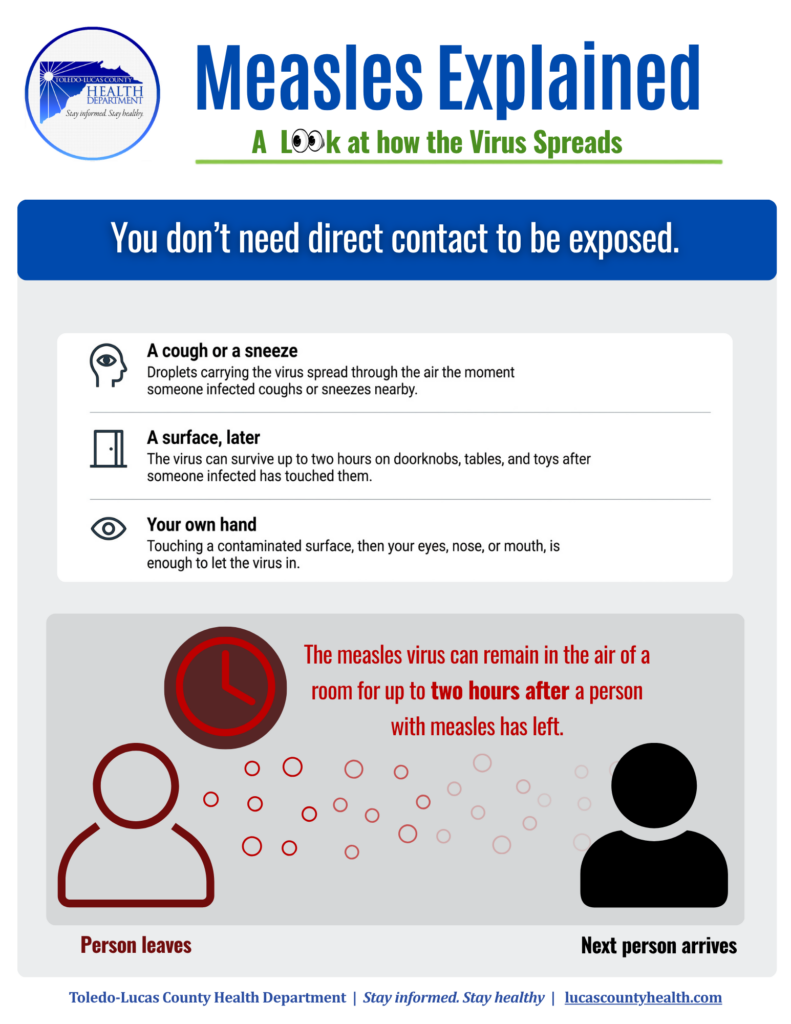
Measles is a highly contagious viral disease that spreads easily from person to person. The virus can remain in the air for up to two hours after an infected person coughs or sneezes. People can become infected by breathing contaminated air or by touching a contaminated surface and then touching their eyes, nose or mouth.
A typical case of measles begins with:
- High fever (can spike to 104 F)
- Cough
- Runny nose
- Red, watery eyes (conjunctivitis or pink eye)
- Small white spots inside the cheeks (Koplik spots)
- rash
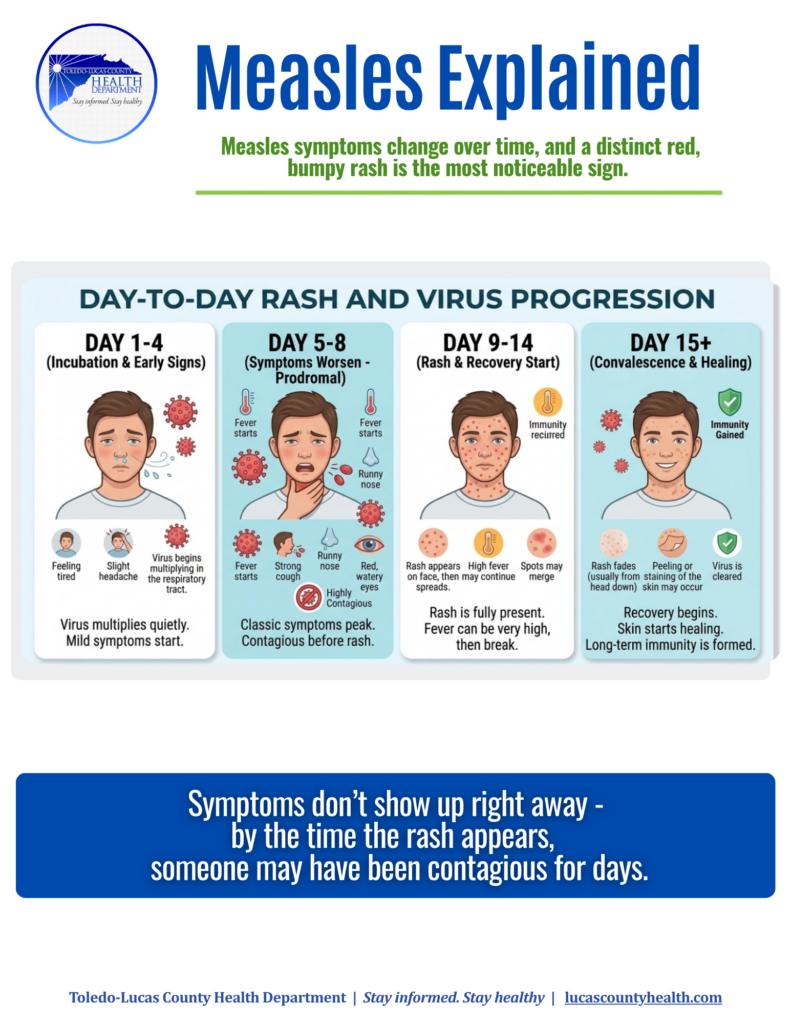
Three to five days after the start of these symptoms, a red or reddish-brown rash appears, usually starting on a person’s face at the hairline and spreading downward to the entire body. At the time the rash appears, a person’s fever may spike to more than 104°F.
People infected with measles can spread it to others from four days before, through four days after, a rash appears.
Prevention
The best way to protect yourself and your family against measles and other vaccine-preventable diseases, is by immunization.
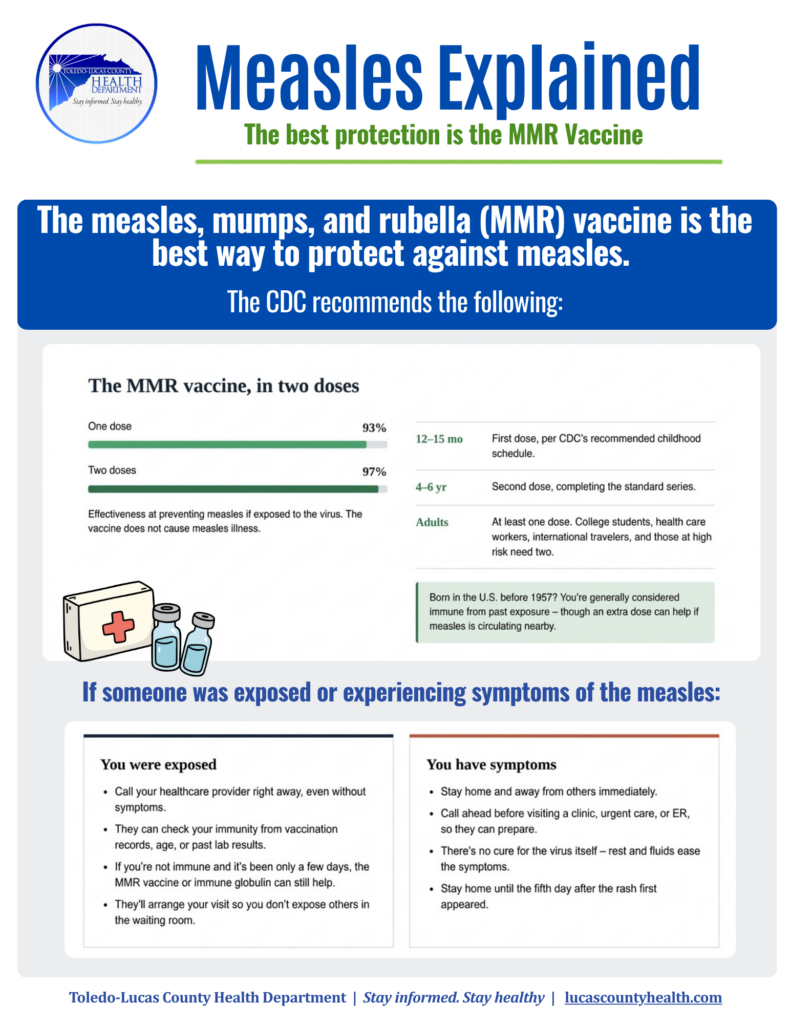
The Centers for Disease Control and Prevention (CDC) recommends all children get two doses of Measles, Mumps and Rubella (MMR) vaccine, starting with the first dose at 12- through 15-months of age, and the second dose at 4 through 6 years of age. One dose of measles vaccine is about 93% effective at preventing measles if exposed to the virus. Two doses are about 97% effective. Measles vaccine does not cause measles illness. Adults should have at least one dose of MMR vaccine.
Certain groups need two doses of MMR, including: college students, health care workers, international travelers, and persons at high risk for measles complications.
Adults born in the U.S. before 1957 are considered immune to measles from past exposures, but in situations where exposure to measles is likely, these
adults may benefit from an additional dose of MMR vaccine. Individuals who are unsure of their vaccination status are encouraged to check with their physician.
For more information about measles cases and outbreaks, visit the CDC website at www.cdc.gov.
###